Practical Applications of Augmented Reality in City Life
As urban areas become increasingly technologically advanced, Augmented Reality (AR) stands out as a transformative tool enhancing everyday city life. This article explores how AR can improve experiences in residential districts, providing practical applications that leverage technology to meet modern needs.
Understanding Augmented Reality
Augmented Reality is a technology that overlays digital information—such as images, text, or animations—onto the real world. According to industry research, AR can enhance user engagement and provide contextual information that is often lacking in traditional media. This integration of digital elements into the physical environment is typically achieved through smartphone apps or AR glasses.

"AR has the potential to revolutionize how we interact with our surroundings, making everyday tasks more efficient and enjoyable." - Tech Industry Expert
Practical Applications of AR in Urban Settings
The applications of AR in urban environments are diverse, making it a particularly valuable asset in residential districts. Below are some practical uses:
- Navigation Assistance: AR navigation apps can help residents find their way around the city, providing real-time directions overlaid on the actual streets. Many users report that using AR for navigation improves their ability to explore new neighborhoods effectively.
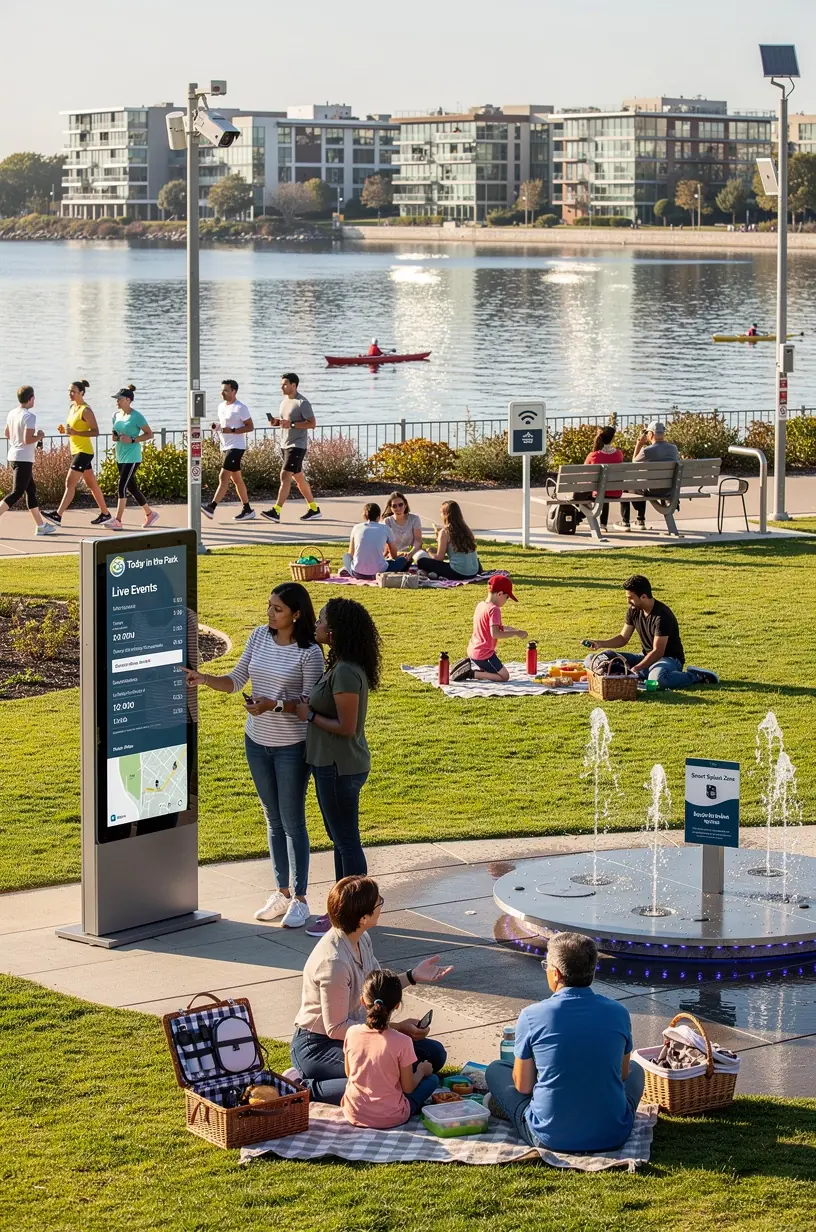
- Enhanced Public Spaces: AR can transform public parks and community spaces by providing interactive elements. For instance, users might point their devices at a historic monument to see animations or hear stories related to it. Research indicates that this can increase community engagement and interest in local history.
- Maintenance Reporting: Residents can use AR applications to report issues such as potholes or broken streetlights by simply scanning the area. This process often reduces the time taken to address problems, as local authorities receive immediate, visual context for the reported issues.
Challenges and Considerations
While AR holds significant promise, it is essential to acknowledge its limitations. Implementing AR solutions typically requires a commitment of time and resources from both developers and city planners. Moreover, users need to possess compatible devices and a basic understanding of how to use AR applications, which can present a learning curve.
Furthermore, AR may not be ideal for every urban environment. According to experts, its effectiveness is often contingent on factors such as internet connectivity and urban density. In less built-up areas, AR applications may face limitations in providing accurate data overlays due to fewer landmarks and points of interest.
Conclusion
Augmented Reality is poised to play a crucial role in transforming urban living, particularly within residential districts. By enhancing navigation, enriching public spaces, and streamlining maintenance reporting, AR can significantly improve the quality of life for residents. However, it is vital to approach these technologies with realistic expectations, understanding that their successful implementation requires careful planning and user engagement.
As cities continue to innovate, the inclusion of AR technologies can foster a deeper connection between residents and their urban environment, paving the way for smarter, more interactive communities.
Learn More